Wednesday, 12 June 2019

Further Discoveries about Sarah-Hope's anatomy driving mobility challenges

With the 'writing on the wall' regarding Sarah-Hope's mobility, I reached out to the Children with TAR Syndrome Facebook group. In the first five years of Sarah-Hope's life, I didn't ask to join the group - it was enough coming to terms with our story, and I certainly had no capacity to deal with other stories. Sarah-Hope's medical and therapy team knew her case well, and after burning out my research capacity during my pregnancy, I enjoyed the simplicity of just doing what I was told. 

But we hit a brick wall with Sarah-Hope's mobility. I had seen every paediatric orthopaedic surgeon in Cape Town and while I agreed with the conservative approach in terms of surgery, it was very difficult to get direction from surgeons for the physios who were wanting to strengthen Sarah-Hope's ability to stand without inflicting damage on her joints. In all fairness to the surgeons though, with such an unusual anatomy, there is little one can predict as to what the impact will be of any particular intervention.

Most of the families with children with TAR Syndrome who pursue surgery either go to Dr Dror Paley or the Shriners charity hospitals in the USA. I got in touch with Dr Paley for an opinion on Sarah-Hope. In addition to X-rays, video footage of Sarah-Hope moving, he said he needed an MRI of her knees, and 4D reconstruction CT scans of all her limbs. The MRI of her knees alone took three hours, which should have been a clue as to the complexity of her anatomy! It was quite astounding to me that no one locally had actually taken this step to find out to clarify what was happening inside these legs of hers - and it was a big blow to discover. It was confirmed that Sarah-Hope has no knee caps, no cruciate ligaments, her tibia and fibia are rotated as a start... Dr Paley recommended a complex reconstruction surgery which would have required us to be in the USA for a few months of rehab after the surgery. He didn't mention follow up surgeries but from tracking other stories, it is very likely that as the child grows, additional problems emerge which then require further intervention. So starting on a surgical route would mean it would be difficult to get off it. I was also concerned about the transfer of knowledge from the rehab therapists in the USA to local ones to sustain the work achieved in the surgery.

Family contacts helped us to get in touch with another orthopaedic doctor in the USA for an opinion - I was so well served by this wisdom: "the decision is more important than the incision". The doctor was referring to the decision to pursue surgery for a child being one that needs holistic consideration from the whole family. We were also encouraged to investigate the Texas Scottish Rite Hospital for Children. 

Going ahead with the surgery that Dr Paley suggested was not an option in terms of cost. Just the first operation / stint in the USA would require us to sell everything we own and we knew that the quote didn't include costs related to any complications that may arise in the operation which we would be naive to think may not arise. We were realistic that as soon as you start the surgical route, it is difficult to get off it. I was also concerned about the amount of time that Sarah-Hope would need to be out of school for surgery / rehab and how this would impact her schooling and our family life.

I arranged an interdisciplinary meeting with a local paediatric orthopaedic surgeon, physio and orthotist to discuss Dr Paley's report. I had to smile at the suggestion that the USA surgeon was both a "genius and manic"! We discussed that we should look to see how we could get Sarah-Hope back on her feet again, even if for just standing transfers. A standing frame would help with this, as well as braces. And so we got the ball rolling on that.


Wednesday, 13 March 2019

Beauty of SARDA


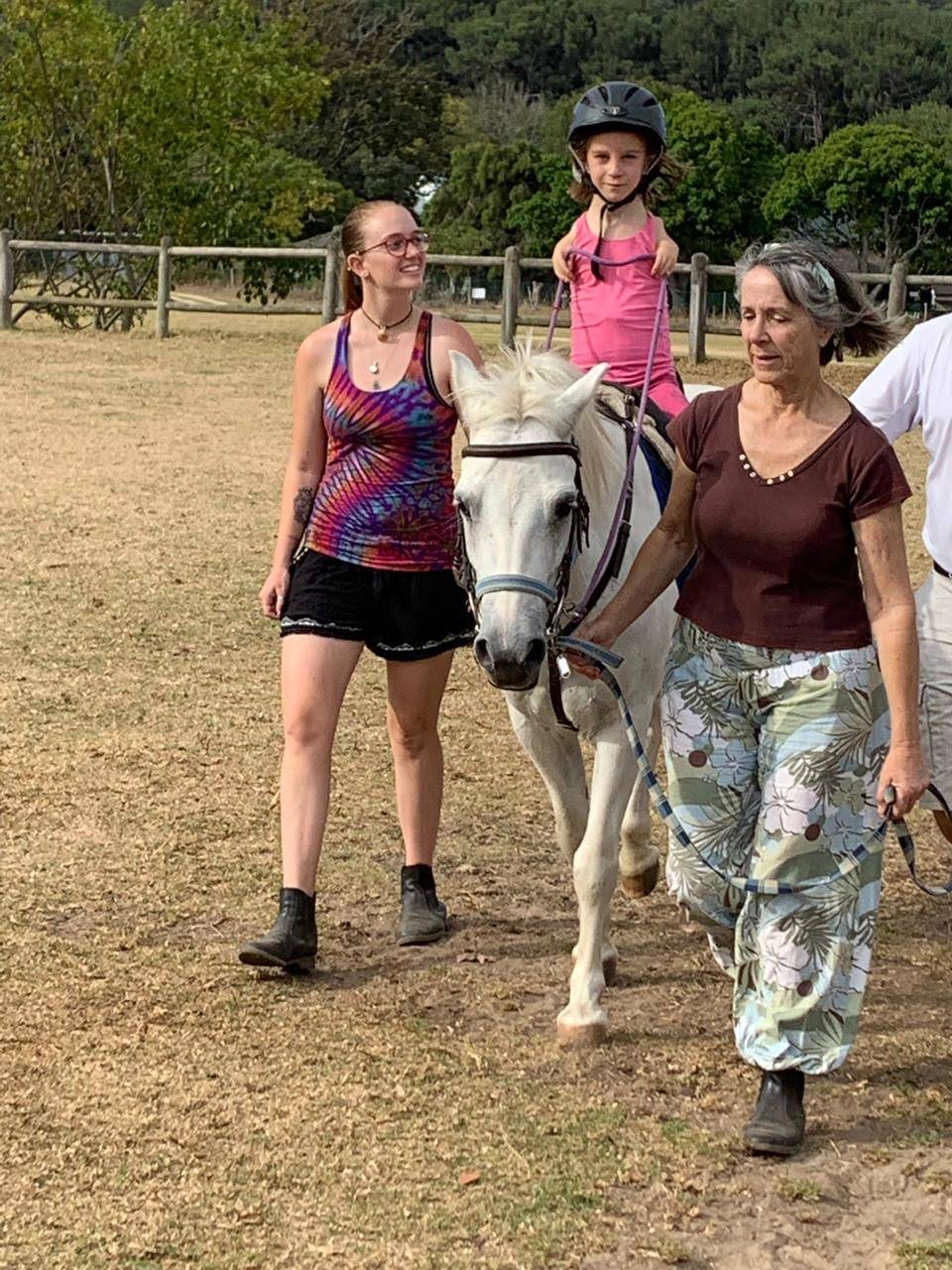
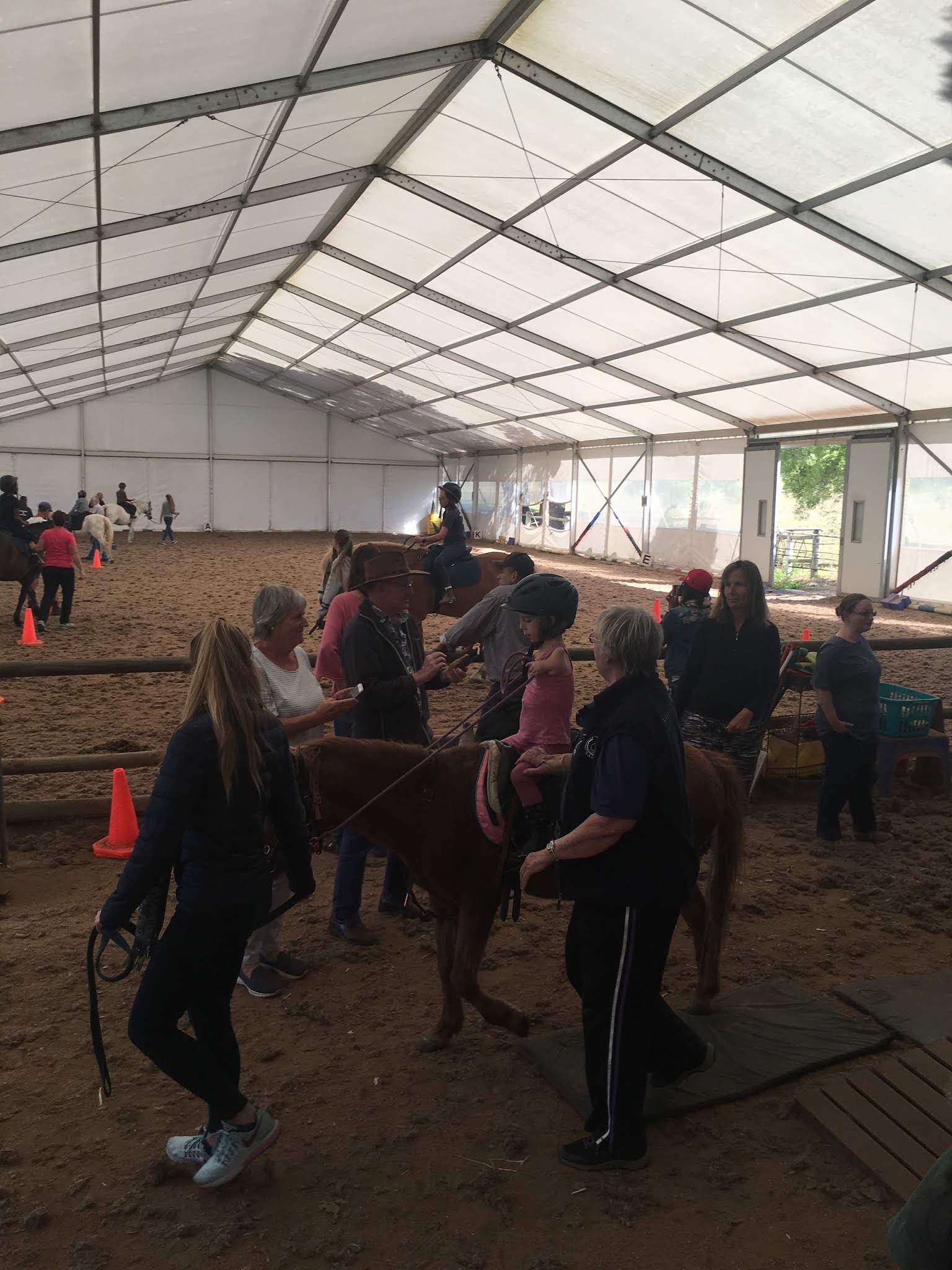
 We are so grateful for the opportunity Sarah-Hope has had to participate in SARDA - South African Riding for the Disabled. It has benefitted her tremendously, especially in terms of confidence and community.


Confidence
Sarah-Hope's confidence has increased significantly through her participation at SARDA. This goes beyond having had the opportunity to be out in the fresh air and working with an animal. SARDA is a place where something is expected of you, and you are supported in achieving it. This is not usually the case for a 'disabled’ child. The positive expectation, unique goals, warm support and subsequent sense of accomplishment has had a profound effect on her.

Working up to trotting on a horse has enabled Sarah-Hope to develop balance and stability, which is essential for her given that she suffers from a low platelet count and has no arms to break a fall should she topple over. The planned events (country challenge, end of year celebration etc) are all opportunities to display progress and to be publicly recognised for it - again something which disabled children are often excluded from experiencing. It is wonderful to see Sarah-Hope beaming with pride as she receives her rosettes.

Community
For Sarah-Hope, seeing other kids with challenges has also been important (often she might feel like the odd one out with her physical differences)... and seeing all these children working towards specific goals has been brilliant. There’s a wonderful sense of camaraderie and she has such positive role models both among the other children and the volunteer helpers.
As a family, we've been hugely grateful for seeing and connecting with other families facing challenges. This helps with the isolation we can often feel.

Without SARDA, we wouldn’t be able to make horse riding (including the adaptive measures required for Sarah-Hope) possible for her. It is an activity that is expensive and time consuming. Given the demands of children with additional challenges, families often don’t have the emotional, time or financial resources as there is so much else you are dealing with.

SARDA is a generous programme that makes it possible for children to benefit in a myriad of ways from working with horses. A huge thank you to those who make this possible!


Friday, 14 December 2018

Settling realities that will require everyday effort in 2019

Sarah-Hope has not had a bad year health wise but she definitely has not had the capacity for the full school week. On a good week, she spent one to two days at home resting. Her body has to work hard to keep up with the school routine so it makes sense that she is more tired than others. But because her immune system isn't the strongest, she also takes a longer time to recover when she does get sick. Knowing we were going to have to see how she managed keeping up at school, we had a flexible arrangement whereby her facilitator could come and bring some school work to her at home on days where she was strong enough to do some "work" but not at school. This was great because she wasn't so disconnected from what had been happening in class and when she did get back to school she could catch up quite quickly. Sarah-Hope's development is never linear - even if she is resting or ill she takes in a lot and processes her world and then bounces back as if she's been practicing in her mind while she didn't have the physical capacity to act it out. Something I have learnt is that if Sarah-Hope is well, she wants to move independently, participate and engage with friends. Its always a flag for me if her attitude towards this changes - she may just need rest, and if she doesn't get it she is likely to get sick in which case we need to patiently build her up from dependence to more interdependence again. I have become a bit of a "rest policewoman" as a result but it just is the reality of our capacity and after all we've been through, I am so used to plans being cancelled that I go into autopilot and reprioritise the day or week or month ahead. I actually see this as a gift that I have to often take the foot off the accelerator, slow down and think again about what to prioritise in order for the whole family to flourish.

Sarah-Hope wasn't hospitalised this year, and had no gut trouble at all. In fact, she has been drinking and eating orally with no nutrition supplemented through her stomach tube and has grown well. She still has her mic-key button which I keep as a back up and for medicine (makes it so easy!). She still avoids dairy (severe milk protein allergy suspected) and gluten (precautionary) and eats a simple diet but has a great appetite. Sarah-Hope has been more constrained by her chest, however. She had very undersized lungs in utero which contributed to her having such a poor prognosis. But her lungs have grown! Upon assessment recently by a paediatric pulmonologist, she was happy with her lung function for a seven year old. However, she wasn't as happy with her air flow. Sarah-Hope underwent a scope to see if her anatomy was perhaps contributing to this. Her left pulmonary artery appeared to be constrained and although there isn't obstruction as such, it is possible that the clip used to repair her heart as an infant is now obscuring the artery. So we're experimenting with a change in chronic medication, using the bronchovibe every morning and evening and a longer term antibiotic with anti-inflammatory properties to see if her lung health improves and her breathlessness and recovery times reduce.

The most significant challenge this year for Sarah-Hope has probably been decreasing mobility. From the triumphant walk across the playground the day before school started... we found that months later she was struggling to stand and put weight on her one leg and walking was not possible on her feet. A family friend who is a physio gave me a perspective about the way she has adapted for functional purposes which I found quite helpful - she has become accustomed to using her one leg as a lower limb, and the other as an upper limb. One leg she can stand on. This is what enables her standing transfers - her weight is all on one leg and she puts out her toe of the other foot to balance. The other leg is her upper limb. Her ligaments are hyper flexible which is amazing because is allows for the passing of goods from the ground where her foot is to her opposite hand which is where her shoulder would be. However, with this repeated movement, her femur actually "slips over" her lower limb bones  given that she doesn't have a stable knee joint. Its a helpful reach function for her - but the impact of that repeated movement on her limbs isn't great for the standing / transferring / walking function.

So what is transpiring is that (when we execute this as we should) she has been walking on her knees, covered by knee protectors (super flexible skater knee pads), and uses her wheelchair for transport where there is wheelchair accessibility (school, church etc). 
 

In our home, we've been trying to create more floor space so that a wheelchair could be used. However our living space is small and so Sarah-Hope is not covering large distances inside so would prefer to walk on her knees rather than move the chair through the space. We've recently adapted a ride on toy for her to wheel herself across a floor space at home or elsewhere to try keep her off her knees and protect them. Its much lighter and could be taken easier to another home whereas the wheelchair is heavy and needs space and ramps into other spaces because it is around 70kg. This is still a work in progress.
 

What has been difficult though is to see the toughening up of her knees as they effectively become like another 'heel', multiple skin layers rubbing off through the pressure of carrying her weight and her knees raw. We've wondered about plasters but the way her knees work as both feet, knees and elbows, no plasters stick, and then she resists them at the thought of the pain of removing them. And what I've discovered this December holiday is that it takes one thorn in the wrong foot or sting on a leg to collapse her as she really can only stand on one leg which makes her quite vulnerable to immobility. The plan for the year ahead is to get a full assessment of her knees. We think the knee cap is missing or displaced but there could be a lot more 'wrong' as well. So we're hoping for clarity (it will probably take an MRI as this kid has some funky anatomy!), after which we can figure out the best way to help her stand and make transfers.
 
What was really encouraging was hearing how Sarah-Hope was participating in the classroom, basically on par academically with her peers. Before the  end of her first term the team felt confident that she would be progressing to Grade 1 in 2019. Her written expression of her knowledge is obviously not the same and in time we expect technology to play a more significant role in helping her - but not until she's tried what everyone else is doing first! Then as she is struggling to keep up we predict she will be increasingly ready to adopt the assistive devices or whatever the solution may be. I imagine this will be the big challenge of the foundation phase. For the first time she made a comment to me at the end of the year saying, "Mom, the other children are MUCH better at drawing than me, MUCH better. Its not fair." I know she feels valued and supported, but amazingly I am usually surprised when I hear her vocalise this kind of disappointment at her "work" not looking like that of others. I imagine Primary School will give us many opportunities to process these emotions, and then to regather ourselves and focus and delight in what she can do.

What has been significant about this year is the shift from one hospital crisis to the next... to the reality of the main issues that we have to deal with, and the unavoidable everyday workload that will be required to push through and make progress in these areas. This next phase is going to take us on a whole new journey of growth, of that I am sure!

Wednesday, 10 October 2018

Fun with friends and family

Let me not forget to include some beautiful moments of refreshing fun with friends! We are so fortunate to have strong relationships around us, what joy!


Tuesday, 18 September 2018

School - Paving a way for greater socialisation

To start a school journey knowing you have the full support from the institution is just amazing. I have really appreciated teaming together with the staff as we learn how to support Sarah-Hope in this new phase of life. Grade R is a lovely age to be integrated into a bigger school as the children's curiosity is still high and their level of self control is better than the earlier years. On Sarah-Hope's first day at school there were a whole lot of questions from her classmates and on that day she elected that her teacher should explain why she has little arms etc (I have heard her answer this question herself although I did it a lot in the early years). Fortunately in Sarah-Hope's case, the link between her visible arm disability and her adaptive use of her lower limbs is often made quite quickly. Even if it is very unusual to see someone using their feet for 'clapping' and other basic arm functions, when you spend time with Sarah-Hope you quickly realise why she is doing that, often followed by a sense of awe in terms of how she is using her body and how your own probably wouldn't manage doing the same.

Knowing that most of us South Africans have little exposure to people with disabilities, we had planned for Nicky Abdinor, a psychologist and inspirational speaker who was born with no arms and shortened legs, to visit the Grade R class and share her story a few weeks into the first term. The idea was to expose the children to a role model who has significant physical difficulties and yet is doing so much with her life. It was so amusing to see the Grade Rs engage. Perhaps Sarah-Hope had settled in so well they had already forgotten their differently-abled classmate because the way they responded to Nicky you could have sworn they had never seen anyone with limb differences before! The questions were endless - "but how do you brush your teeth? and put on your shoes?" I found it fascinating how they quickly accepted their classmate but when processing an adult who uses their body differently to drive, send text messages on her mobile phone, email on her computer and do real life they were truly astounded! As I arrived at the school for the talk one of Sarah-Hope's friends ran up to me saying that Sarah-Hope is so lucky to have hands as Nicky doesn't have any - so true! Nicky and her mom have told me what an advantage those little hands are. And lying in bed with Sarah-Hope the other night, she was talking to me about her hands and how useful her middle two fingers are to her in particular. "They help me a lot," she said.

After that visit, we realised that it would be wonderful for Nicky to visit Pinelands North Primary School as Sarah-Hope would be progressing to Grade 1 there in 2019 and she was already going onto their campus to the hall or library so many older kids were seeing her whizzing about in her wheelchair but without the same sense of her story. Nicky came and addressed the school during assembly in the third term and shared her stories and messages of inspiration. The children were captivated. Sarah-Hope hadn't been in that assembly but mentioned to her facilitator later that week her confusion as to why so many people were saying hello to her because she had no idea who they were. But she still has had to learn to be friendly in return and polite when people have tried to engage with her and help her, especially if she doesn't want or need the assistance! Sarah-Hope's teacher mentioned this to me - how children were engaging and making an effort and she wasn't really responding. I believe this has improved over the year as she has felt increasingly part of the class, which is great. But what is greater is that Sarah-Hope used to be terrified of people. With an intense medical infancy and more needles stuck into her than we'd like to remember, she would always view a new person suspiciously and wonder what they were going to do to her. So the fact that she is becoming friendly from that baseline is amazing. As a baby she would look serious, like a wise owl. Now she is obviously lively and eager to engage with the people and world around her. So her social development has progressed as she's being exposed to a world much bigger than a hospital and therapy session. I'm so grateful.

Mobility has been a challenge this year (more on this in the next post) and it has had an impact on her relating at school. Grade R is still filled with a lot of outdoor play and more movement than one would expect at the Grade 1 level. Kids move outside and then in a split second may decide to run to the jungle gym or swings and leave her behind - not intentionally though, that's just how 5 and 6 year olds operate. She started figuring out that the staff supervising the playground were the most likely to be stationary and so would gravitate towards them to sit and watch the children, both because she could rely on them being in the same position but also because she could rest a bit and watch kids which she enjoyed. Her teacher realised this was not going to be a helpful pattern for Grade one though as kids disperse throughout the school in break time and she wasn't going to have the comfort of proximity to teachers for company. And so she was challenged to go out and play in her breaktime, after asking a fellow classmate for help with her lunchbox. In the end she found herself a safe space - the sandpit. Close to where the teachers were located and the door back into the classroom so she didn't have to travel far, and also a place where she could play by herself happily and welcome others into if they chose to come and play there. This is something I've been talking to her about - that although she is used to being accommodated for, there are many other children who also need to reached out to and included and she should use her strengths for this too. It will be interesting to see how she navigates the primary school playground at break time both physically and socially.

Monday, 14 May 2018

Let's adapt a bike for Sarah-Hope!

After the Cape Town Cycle Tour, Sarah-Hope was adamant she wanted to ride a bike, not just a wheelchair. We solicited some help from the amazing BMC in Woodstock and they helped us to adapt a bike for her using pool noodles to extend the handlebars.

Sarah-Hope's physio, Kirsty, helping Sarah-Hope get going! So good for her to extend those legs...


As time has gone on, Sarah-Hope doesn't ride much. Even with training wheels, she is quite vulnerable to falling on a regular bike. A trike could work in terms of providing extra stability, and she could definitely benefit from electric wheels to power her along if she tires. But the problem is that it then becomes a heavy bike and one that she can't manage easily by herself which reduces it as an experience of independence. 

It will be an serious investment to make the right bike for her one day - so we're likely to wait until she's fully grown and then take it from there!


Thursday, 12 April 2018

Warrior on Wheels adventures

What an amazing organisation we found in Warrior on Wheels (see https://warrioronwheels.co.za/). Deidre Gower, who founded the organisation, has brilliantly worked to use the Cape Town adventure opportunities usually enjoyed by tourists to encourage accessibility and special events such that families such as ours can enjoy them.

Wonderful adventures are organised for the warriors... the kinds of opportunities that we would never have the energy to arrange for our children given our circumstances! And they would be laid on... sponsored, organised, with a whole community of families with similar struggles.

It was through Warriors on Wheels which Sarah-Hope had her first ride on a horse in 2016, which was an transformative experience at a time when she started to lose her mobility. You do need some specialist assistance when riding with physical differences so it was amazing to have this first opportunity arranged.

Sometimes an adventure would come up that could include the whole family - one of these was an absolute blast of a sidecar adventure around the peninsula! 


And the other special one to note was the introduction to the Cape Town Cycle Tour. I really would not have picked up that there was a Junior Cycle Tour for kids but through Warriors on Wheels and all the special arrangements that were made for us, we got to join in with such ease.

Sarah-Hope was as determined as ever. She rode her wheelchair with proper focus with Rich as her co-pilot. I had the joy of accompanying Libby - to see the sheer joy on her face taking part in the event was just beautiful. I am so grateful to Warriors on Wheels... not only for what they've done for Sarah-Hope, but for what they've done for Libby as well.